Rotterdam
Currency
Euro (€)
Language
English, Dutch
Best Time to Visit
April, October
Getting Around
Walk, Bike, Waterbus
Table of Contents
Things to do?
My Favorites
Top 10 Attractions
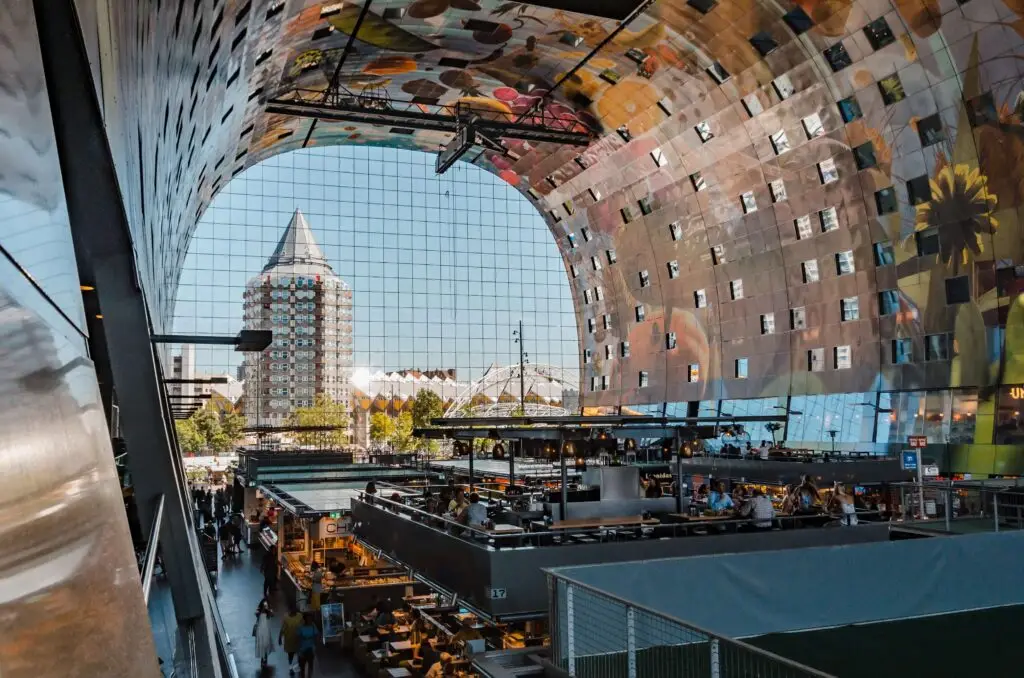
1. Market Hall
Rotterdam’s Markthalle sits in the City Center’s Heart, where fresh products pile high. Snacks tempt from every stall, while drinks flow freely.

2. Cube House
The Cube House designed by Dutch Architect Piet Blom, tilts at impossible angles. 39 Individual Cubes stack like dice across the skyline.
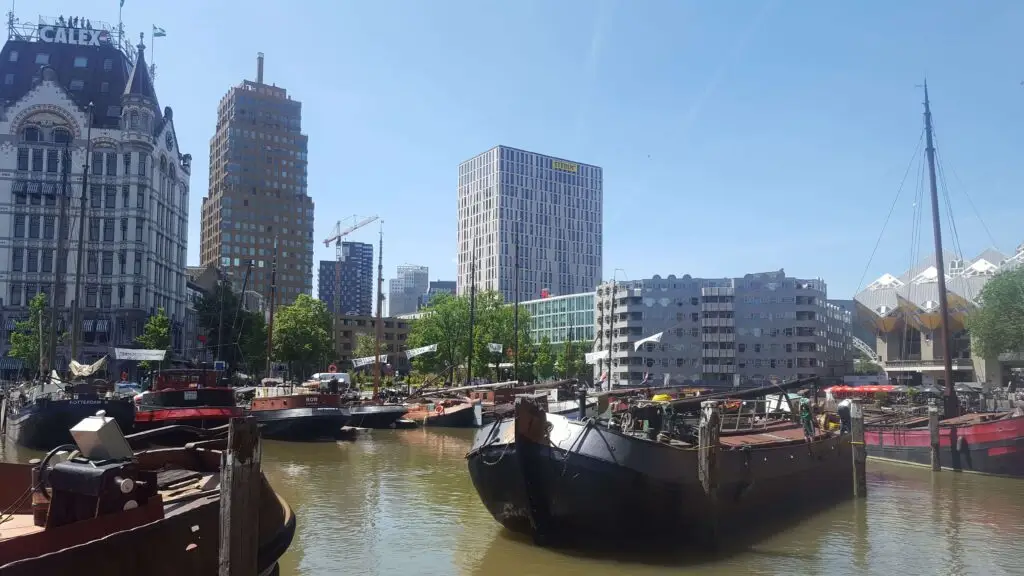
3. Old Harbour
Rotterdam’s Old Harbour transformed into a cultural center. Restaurants line the water, parks sprawl along the docks and harbor views. Ready to play a Game?

4. Erasmus Bridge
The Erasmus Bridge sweeps cables across the Nieuwe Maas river, built in 1996. Enjoy a Harbour Cruise with the city unfold in front of you.

5. Euromast Tower
The Euromast Tower rises 185 meters high, offering 360 degree vision. Zip lining available, while rock climbing challenge you to scale higher.

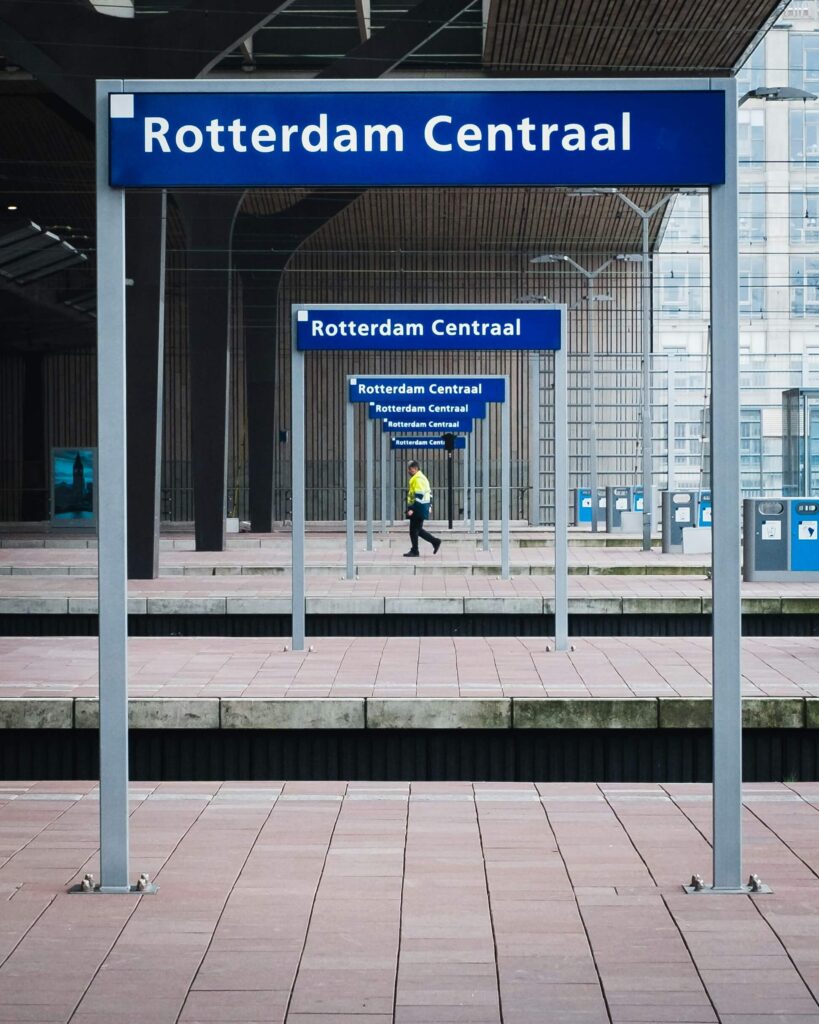
7. Central Station
Rotterdam Central Station connects local and international trains as the city’s main hub. Start a Food Walking Tour steps from the platform.

8. Witte de Withhof
Witte de Withhof pulses with creative energy. Exhibitions rotate, while artists claim walls to display their work and bookstores draw readers into corners.
9. Kinderdijk Windmills
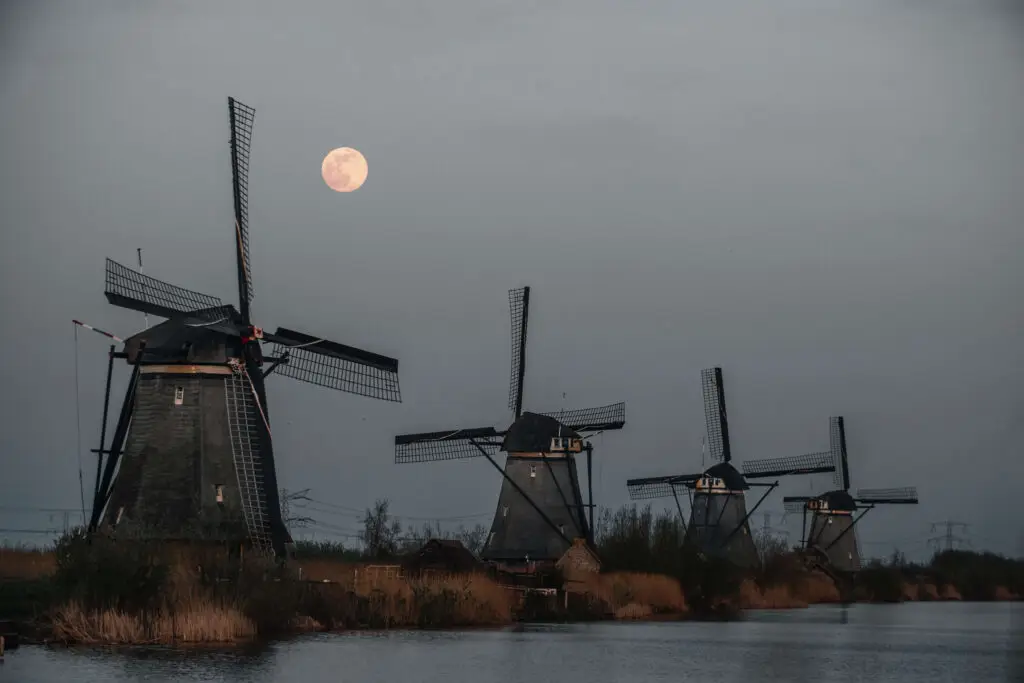
The Windmills of Kinderdijk earned UNESCO World Heritage status. The Region preserves 19 iconic Windmills standing strong for over 300 years.
- Sightseeing
- Architecture
10. Fenix Food Factory
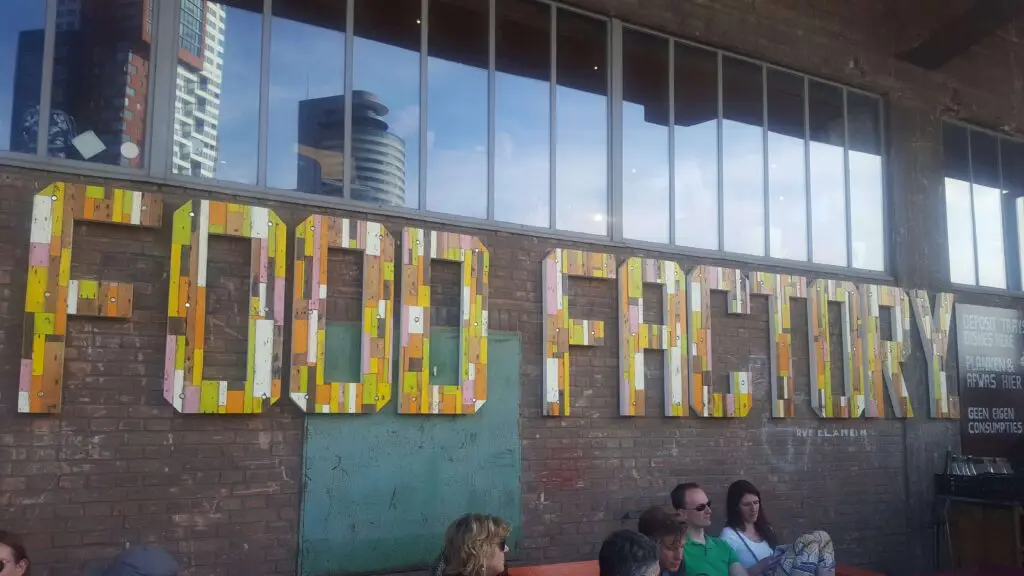
The Fenix Food Factory packs local vendors under one roof, selling products made right here. Otherwise hop on a Water Tour perhaps with a tasty Beer?
Top 10 Attractions in Rotterdam
Market Hall
A Feast for the Senses
The ceiling is an explosion. Fruits and flowers and vegetables cascade overhead in impossible colors painted across the entire arch.
Markthal Rotterdam opened in 2014 as the Netherlands first covered food market. The building combines a market hall with apartments, 228 residences wrap around the horseshoe shaped structure creating the walls and roof. Dutch artist Arno Coenen designed the ceiling artwork called “Horn of Plenty” depicting supersized produce in photorealistic detail across 11,000 square meters. The market floor holds 96 fresh food stalls and 8 restaurants. Underground parking and stores fill the lower levels. The building replaced an outdoor market that operated here since 1947. MVRDV architects designed the structure to become an icon for modern Rotterdam.
Vendors call out prices in Dutch. The smell of fresh fish competes with cheese and baked bread. Stroopwafels cook on griddles releasing caramel sweetness. Natural light pours through the glass end walls. The painted ceiling overwhelms your vision, massive strawberries, corn, mushrooms and fish creating a saturated dreamscape overhead. Shoppers push carts between stalls. Tourists crane their necks photographing the artwork. Locals grab ingredients for dinner barely glancing up anymore.
The market operates daily and locals actually use it. This isn’t just architectural spectacle, it’s functioning food culture under one surreal roof.
Visit on Saturday morning when the market buzzes with energy and vendors offer samples. Look up but also look at what people are buying, aged cheeses, fresh herring, Indonesian spices and produce from Dutch greenhouses. The restaurants along the perimeter serve better food than typical market stalls. Stand in the center and let the ceiling art wash over you. Rotterdam rebuilt itself bold and this building captures that spirit perfectly.
Cube House
Tilting Towards the Future
The houses tilt at 45 degrees. Living inside one must feel like inhabiting a geometric puzzle.
The Cube Houses, Kubuswoningen, were designed by architect Piet Blom and built between 1982 and 1984. Blom conceived each house as an abstract tree with all the houses together forming a forest. Each cube tilts on one corner creating three floors of awkwardly angled living space inside. The houses sit on hexagonal pylons above a pedestrian bridge. Thirty-eight cubes form the main cluster with several additional cubes nearby. One house operates as a museum showing how residents adapt furniture and daily life to the tilted walls and slanted windows. People still live in the other cubes making this functioning housing rather than pure architecture experiment.
The yellow cubes catch afternoon light creating sharp geometric shadows. Windows angle in impossible directions. Inside the show cube nothing sits quite level. Beds fit in the lower levels where ceiling height permits. The top floor becomes a pyramid of windows with limited usable space. Furniture must be custom-made or cleverly arranged. The smell inside is ordinary, wood and paint and lived-in space, which somehow makes the geometry feel stranger.
Residents have adapted to the angles. They chose these houses knowing the compromises. For them the unique architecture outweighs the practicality issues.
Visit the museum cube to understand what living here actually means. The exterior photograph makes tourists stop but the interior experience makes you rethink assumptions about domestic space. Go midday when sunlight penetrates the angled windows creating the best interior atmosphere. The cubes represent Rotterdam’s willingness to experiment even with something as fundamental as housing. Not every experiment succeeds completely but this one became iconic anyway.
Old Harbour
A Walk Through History
The warehouses survived the bombing. Now they house restaurants where people drink wine and watch the water.
Oude Haven, Old Harbour, is Rotterdam’s original medieval port dating to the 14th century. Most of Rotterdam was destroyed in the 1940 German bombing but several historic buildings around the harbor survived including the White House from 1898. After the war the harbor lost its commercial shipping function as the port expanded westward. The area declined until redevelopment in the 1980s transformed the waterfront into a leisure zone. Historic ships now moor in the harbor as floating museums. Cafes and restaurants occupy the ground floors of restored warehouses. The neighborhood connects old Rotterdam to the modern city that grew from the rubble.
Water laps against stone quays. Rigging clinks against masts. The smell of the harbor, salt and diesel and old wood, mixes with coffee and cooking from the restaurants. The White House rises white and ornate among newer buildings. Historic ships bob gently. People sit at outdoor tables even when it’s cold wrapping themselves in blankets the restaurants provide. Cyclists pass along the harbor path. In summer the terraces fill completely.
This harbor reminds Rotterdam of what it was before everything changed. Locals bring visitors here to show the city has roots deeper than its modern reputation suggests.
Come for late lunch on a sunny weekday when tables are available and the light hits the water perfectly. Walk the full harbor perimeter to see how the historic and modern sections connect. The White House interior isn’t open but its presence matters as a survivor. Rotterdam rebuilt itself into something new but kept just enough of the old to remember where it started.
Erasmus Bridge
A Swan Soaring Over the City
The bridge sweeps across the river like a harp string pulled taut and bright.
The Erasmus Bridge opened in 1996 connecting Rotterdam’s northern and southern banks across the Nieuwe Maas river. Designed by Ben van Berkel it spans 802 meters with an asymmetrical pylon rising 139 meters. The single pylon leans backward at an angle supporting the bridge deck with steel cables in an asymmetric fan design. Locals call it “De Zwaan”, the Swan, because of its elegant profile. The bridge carries cars, trams, cyclists and pedestrians. It quickly became Rotterdam’s most recognizable symbol appearing in every cityscape photograph and promotional material. The southern approach includes a bascule bridge section that lifts to let tall ships pass.
The cables hum in wind. Traffic thrums across the deck. From below the bridge creates powerful geometry against the sky, white concrete, steel cables and negative space. The river reflects the structure doubling its presence. At night blue LED lights illuminate the pylon making it glow against darkness. Cyclists cross in dedicated lanes. Pedestrians stop midway to photograph the skyline views in both directions.
Rotterammers take pride in this bridge. It represents the city’s modern identity, bold, functional and undeniably striking. They use it daily without ceremony but still feel a flicker of appreciation.
Walk across rather than just photographing from a distance. The experience of moving through the structure beats any exterior view. Go at sunset when the light turns the white concrete warm and the city begins to glow. The pedestrian path runs along the eastern side with unobstructed views. This bridge doesn’t just connect geography, it connects Rotterdam’s destroyed past to its confident rebuilt present.
Euromast Tower
A Bird's Eye View of a Reborn City
The elevator rises through the center of the structure. Your stomach drops slightly as the city expands below you.
The Euromast was built in 1960 for the International Garden Exhibition reaching 101 meters. In 1970 the Space Tower was added bringing total height to 185 meters making it the tallest structure in Rotterdam. The tower offers observation decks, a restaurant and two hotel suites where guests can sleep suspended above the city. A rotating elevator called the Euroscoop rises along the outside of the Space Tower giving 360-degree views during ascent. On clear days you can see 30 kilometers across Rotterdam and beyond to the North Sea. The tower was designed by Hugh Maaskant in a style that looked futuristic in 1960 and now reads as charming mid-century modernism.
Wind buffets the observation deck. The city spreads in every direction, the river cutting through, the port extending west, the skyline punctuated with towers. Cars on the streets look like toys. Ships moving on the Maas seem impossibly small. The Euroscoop creaks slightly as it rotates. Inside the restaurant glasses clink and conversation echoes against windows. The smell is what you’d find in any tower, recycled air and slight mustiness of aged infrastructure.
Locals don’t visit regularly but they appreciate having it. The Euromast anchors Rotterdam’s skyline giving the city a vertical reference point.
Book the Euroscoop for the full experience, the base observation deck is good but the rotating elevator adds theatrical drama. Visit late afternoon to see the city in daylight then watch it transform as evening arrives and lights begin to glow. Skip the restaurant unless you’re celebrating something, the view is excellent but the food is on the high side. Sometimes the best way to understand a city is to leave it briefly and look down.
Het Park
A Green Oasis in the Urban Jungle
The grass slopes down to the water. People lie on blankets reading books or doing absolutely nothing at all.
Het Park opened in 1852 as Rotterdam’s first public park designed in English landscape style. It sits just west of the city center along the Nieuwe Maas river covering 32 acres. The park features winding paths, mature trees, a rose garden and the Euromast tower rising from its edge. The Nieuwe Instituut, an architecture and design museum, occupies a building at the park’s entrance. During World War II the park suffered damage but was restored afterward. Today it serves as the city’s primary green lung and gathering space. Summer concerts and festivals occasionally fill the lawns.
Trees filter sunlight creating moving patterns on the grass. Birds call from branches. The river smell drifts up the slope, water and algae and boats. Joggers follow the perimeter path. Parents push strollers. Students spread out textbooks but mostly stare at their phones. Dogs run off-leash in designated areas. The roses bloom in waves of color releasing perfume in early summer. Traffic noise fades once you move deeper into the park.
This is where Rotterdam exhales. Office workers eat lunch here. Residents come for evening walks. The park doesn’t try to be spectacular, it just provides space to breathe.
Enter from the north side near the Nieuwe Instituut where the paths are quieter. Bring coffee from one of the nearby cafes and claim a spot with a river view. The park connects to waterfront walking paths if you want to extend your route. Spring and early autumn offer the best conditions, summer crowds pack the lawns on sunny days. Every city built on concrete and ambition needs pockets of green where nothing much happens. Het Park serves that purpose faithfully.
Central Station
A Gateway to Adventure
The roof angles upward like an arrow pointing to the future or maybe just to the train tracks beyond.
Rotterdam Centraal Station opened in its current form in 2014 after a complete rebuild. The original 1957 station was demolished to create a modern transportation hub serving 110,000 passengers daily. Team CS, a consortium of architects including Benthem Crouwel, designed the current structure. The most striking feature is the massive angled roof covered in stainless steel that rises 150 meters long creating a dramatic entrance hall flooded with natural light. The station serves as a gateway to the city and a statement about Rotterdam’s architectural ambition. Underground platforms connect to metro lines and the main hall houses shops and restaurants.
Announcements echo through the vast space. Wheels of luggage click across polished floors. The roof channels light down into the hall creating bright geometric patterns. The building smells like any modern station, coffee, perfume samples from shops and the faint rubber smell of train systems. Travelers flow in purposeful streams toward platforms. Some pause to look up at the roof’s engineering. Locals move through barely registering the architecture anymore.
The station functions as the city’s front door. First impressions matter and Rotterdam chose bold over safe. Visitors stepping off trains immediately understand what kind of city they’ve entered.
Use the station as an architectural experience not just a transit point. The main hall looks best in morning light when sun streams through the angled roof. Shops and food options inside are acceptable but the surrounding neighborhood offers better choices. The station represents Rotterdam’s approach to rebuilding, they could have built something merely functional but instead created something that announces confidence. That difference defines the entire city.
Witte de Withhof
Where Art Meets Street
On Friday night the street transforms. Every doorway pulses with music and light and people spilling onto the pavement with drinks.
Witte de Withstraat, locals just call it Witte de With, runs through Rotterdam’s cultural corridor near Museum Park. The street was named after a 17th-century Dutch naval officer but became famous in the 1980s as the city’s arts district. Galleries, studios and alternative spaces opened in the affordable buildings. Restaurants and bars followed. Today the street houses contemporary art galleries, ethnic restaurants, brown cafes and nightlife venues packed into a few blocks. The Witte de With Center for Contemporary Art anchors the cultural reputation though it closed its Witte de With location in 2019 after renaming itself Kunstinstituut Melly. The street maintains its reputation as Rotterdam’s creative heart.
Neon signs glow against brick facades. Music from different venues bleeds together creating layered soundscapes. The smell of Indonesian food drifts from one restaurant. Ethiopian from another. Lebanese from a third. People smoke outside bars talking loudly. Gallery windows display video installations and abstract paintings. Cyclists weave through pedestrians. The energy peaks after 10pm. when the street becomes one continuous party stretching several blocks.
This is where Rotterdam’s creative class gathers. Artists, designers, students and anyone who prefers rough edges to polish claim this street as their territory.
Visit Thursday or Friday evening when the mix of gallery openings and nightlife creates perfect energy. Avoid Saturday when it becomes too crowded to move comfortably. The galleries are free and worth visiting before settling into dinner. Don’t plan too specifically, the best experiences come from wandering and choosing a place based on the crowd spilling outside. Witte de With shows you Rotterdam’s experimental soul underneath all the modern architecture.
Kinderdijk Windmills
Where Giants Spin
Nineteen windmills line the canals. Their sails turn slowly like they’re measuring time in a rhythm older than modern speed.
Kinderdijk sits about 15 kilometers from Rotterdam where the rivers Lek and Noord meet. The windmill network was built around 1740 to drain the polder and prevent flooding. Nineteen mills work together pumping water into reservoirs that flow to higher ground. UNESCO designated Kinderdijk a World Heritage Site in 1997 recognizing it as an outstanding example of Dutch water management. Most mills remain in working condition though modern pumping stations now handle the primary drainage work. Several mills open for tours showing how families once lived inside while operating the pumps. The site is accessible by bike or water bus from Rotterdam.
Wind moves through the grass in visible waves. Water in the canals reflects the mills creating double images. The wooden sails creak as they rotate. Inside the mills everything smells of old wood and mechanical oil. Gears and wheels tower overhead. Living quarters are surprisingly small, just a few rooms where miller families raised children while managing water levels. Sheep graze the embankments. Cyclists pass on the paths between mills. Tour boats drift along the canals.
This is Dutch identity distilled to its essence, the constant battle with water and the engineering solutions that made a nation possible. Visitors from around the world come to see it.
Rent a bike in Rotterdam and ride here following the waterbus route if you want exercise with views. Alternatively take the Waterbus 202 which runs regularly and accepts transit cards. Visit on weekdays to avoid tour groups. Go inside at least one mill to understand that people actually lived and worked in these structures. The landscape here looks exactly like the paintings you’ve seen, flat horizons, water and windmills. Sometimes the cliche image exists because it’s simply true.
Fenix Food Factory
Rotterdam on a Plate
The warehouse still looks industrial. But now it smells like fresh bread and roasting coffee and cheese aging in careful conditions.
Fenix Food Factory opened in 2014 in a 1922 warehouse on Katendrecht peninsula. The building once stored goods from ships arriving at Rotterdam’s port. When shipping moved to modern facilities the warehouse sat empty until developers transformed it into a food hall featuring local artisan producers. The concept differs from typical food halls, instead of just selling products these makers produce on-site. A brewery, bakery, cheese maker, coffee roaster, distillery and other food artisans work in glass-walled spaces where visitors watch production. The rooftop terrace offers panoramic city and river views. The project helped revitalize Katendrecht which had declined after the port relocated.
Machines hum and clank in the production spaces. The coffee roaster releases waves of rich aroma. Bread emerges from ovens crackling as it cools. Cheese wheels age on wooden shelves behind glass. People sample products at counters then buy whole items to take home. The rooftop fills with tables where visitors eat and drink with the skyline spread before them. Industrial beams and concrete floors preserve the warehouse character. Natural light floods through huge windows.
Locals come here for specialty ingredients and weekend lunches. It’s popular but doesn’t feel touristy because the production is real and ongoing.
Take the elevator to the rooftop first to orient yourself and appreciate the setting. Then work your way through the ground floor sampling at each station. The cheese counter offers tastes, ask questions and they’ll explain aging processes and flavor profiles. Stay for lunch combining items from multiple vendors. Fenix proves that food halls work best when production and consumption happen in the same space. You’re not just buying, you’re witnessing craft.
Conclusion
FAQs
How to Get to Rotterdam
How to Travel to Rotterdam From Major Cities
Here’s an outline from key locations:
Amsterdam
- Car: Enjoy a scenic drive of approximately 1 hour via A13 highway.
- Train: Direct trains from Amsterdam Centraal Station take around 45 minutes.
- Bus: Regular bus services take around 1 hour and 30 minutes.
Eindhoven
- Car: A short 30 minute drive via A2 highway.
- Train: Direct trains from Eindhoven Centraal take around 30 minutes.
- Bus: Quick bus connections with a travel time of 45 minutes.
Utrecht
- Car: Take in the scenery with a 1 hour drive via A13 highway.
- Train: Direct trains from Utrecht Centraal Station take 1 hour.
- Bus: Comfortable buses take around 1 hour and 30 minutes.
Parking in Rotterdam
- Street Parking: Llimited on street parking, often restricted to areas and time frames.
- Public Parking Lots: The city provides several public parking garages and lots.
- Hotels w/ Parking: Many hotels in Rotterdam offer on site parking facilities.
Airport Access in Rotterdam
- Location: Situated approximately 8 kilometers from the center.
- Transportation: Taxis and shuttle services are readily available for a quick transfer.
- Car Rental: Several reputable car rental agencies operate at Rotterdam The Hague Airport.
Ground Transportation in Rotterdam
Cars, buses and trains, the triumphant trio of travel. Providing a variety of choices:
Best Resources for Travel Planning

Flights
- Skyscanner
- Kayak
- Momondo
Accommodation
- Booking
- Agoda
- Hostelworld
- Airbnb
- +More
Transport
- Rental Cars
- Flixbus
- Trainline
- Interrail Pass
- + More
Tickets
- Viator
- Get your Guide
- Tripadviosor
Travel Finance
- Wise
- Revolut
Credit Cards
- American Express Gold Card
- Citi Premier Card
Travel Insurance
- Safety Wing
- Insure My Trip
- Medj
VPN
- Surfshark
- NordVPN
Flights
For seamless travel, meet your flight-booking wizards.
- Skyscanner: The Swiss Army knife, budget-wise, with a user-friendly interface.
- Kayak: Your travel detective, comparing deals across platforms, explore feature.
- Momondo: The local friend, uncovering affordable flights, for unique itineraries.
Accomandation
Choosing accommodation is like selecting a travel companion—it shapes your journey.
- Booking: Cozy guesthouses to luxury hotels, user-friendly and easy booking.
- Agoda: Unveiling unique accommodations, perks through a loyalty program.
- Hostelworld: The budget explorer’s compass, guiding to affordable stays.
- Airbnb: The disruptor, your local friend guiding you to unique spots.
- Secret Escapes: Offers exclusive deals on luxury accommodations worldwide.
- HostelPass: Discounts and perks for budget travelers staying in hostels.
- Plum Guide: Curates a collection of high-quality vacation rentals vetted by experts.
Transport
Discover Cars, Buses, and Trains for a journey as memorable as your destination.
- Rental Cars: Freedom on wheels, from compacts to SUVs, explore at your pace.
- Flixbus: Budget-friendly bus journeys across Europe for city-hopping.
- Trainline: Swift and easy track navigation with a one-stop ticket booking.
- Interrail Pass: Unleash European train travel magic, exploring diverse cultures.
- Eurail Pass: Extensive rail travel across Europe’s diverse landscapes.
- Rom2Rio: Simplifies travel planning by comprehensive route options.
- Outdoorsy: Connects nature enthusiasts with distinctive outdoor Rental.
- RV Share: Enables travelers on road trips through peer-to-peer RV rentals.
Tickets
Online ticketing platforms have revolutionized travel and entertainment experiences.
- GetYourGuide: Turns ordinary trips into immersive adventures, local guides.
- Viator: Simplifies your travel experience, offering a seamless platform for tours.
- Tripadvisor: Your guide to travel reviews and recommendations.
Travel Finance
Simplifying transactions and currency exchange for a smooth travel money experience.
- Wise: Formerly TransferWise, empowers travelers with real mid-market rates.
- Revolut: Fintech trailblazer, an app, currency wallet and fee-free spending abroad.
Credit Cards
Credit cards offer benefits like rewards and are useful for easy transactions or purchases.
- American Express Gold Card: Dive into a world of privileges and points.
- Citi Premier Card: A blend of rewarding points and flexible redemption options.
Travel Insurance
Providing comprehensive coverage and protection for travelers globally.
- Safety Wing: Excels in flexibility, providing coverage for digital nomads.
- Insure My Trip’s: Extensive network facilitates easy comparison.
- Medjet: Emergency transport, ensuring rapid air medical transport.
VPN
Encrypting your connection, hides your IP address, and defense against cyber threats.
- Surfshark: User-friendly features, unlimited device connections, secure.
- NordVPN: Vast server network, high speed connections and safe online presence.