
Utrecht
Currency
Euro (€)
Language
English, Dutch
Best Time to Visit
April, October
Getting Around
Walk, Bike, Bus
Table of Contents
Things to do?
My Favorites
Top 10 Attractions

1. Dom Tower
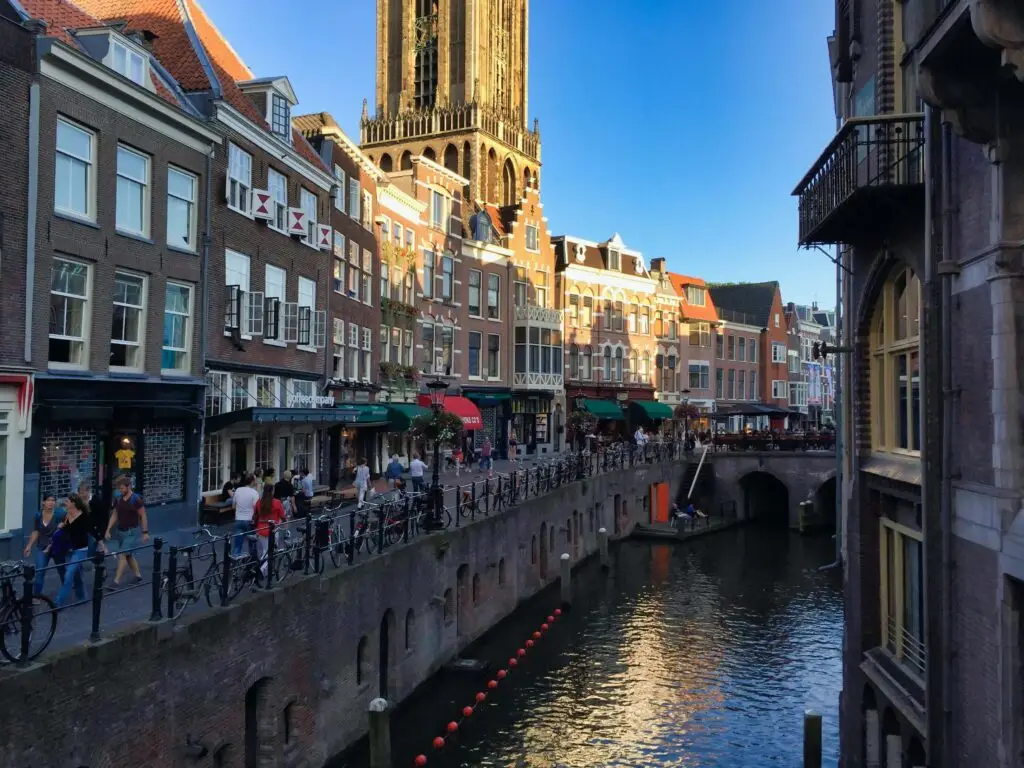
The Dom Tower located in the heart of Utrecht, standing as the tallest church tower in the Netherlands at an impressive 112m.

3. Utrecht Lumen
Utrecht Lumen glows as fully interactive light art piece. Utrecht artwork comprises 300 bulbs that shift color with the seasons and time of day.

4. Wilhelminapark
Wilhelminapark spreads gardens and walkways through southern Utrecht. The pond sits peaceful, making this public park ideal for strolls.

5. Molen de Ster
Molen de Ster stands as Utrecht’s working windmill, open for public tours and visits. Step inside and learn about the history and construction.

6. Spoorwegmuseum
Spoorwegmuseum houses vintage Railway Museum collections. The museum showcases railway equipment from decades past.
- Sightseeing
- Architecture
7. Centraal Museum
Dutch art and culture fill the Centraal Museum, where exhibitions span centuries of Dutch history across multiple galleries.


10. De Boerenmarkt
The local market, De Boerenmarkt, sells fresh meat, seafood and goods like cheese. In winter, visit the Christmas Market or try a Vegan Tour.
Top 10 Attractions in Utrecht
Dom Tower
Crown Jewel of Utrecht
The bells ring and the whole city pauses. For a moment everyone shares the same sound.
The Dom Tower, Domtoren, represents Utrecht’s most iconic landmark rising 112 meters above the city center. Construction began in 1321 and took nearly 60 years to complete. The tower was originally part of St. Martin’s Cathedral but a tornado destroyed the cathedral nave in 1674 leaving the tower standing alone. It remains the tallest church tower in the Netherlands. The tower holds 50 bells including a 13-bell carillon from 1505. Climbing the 465 steps takes you through the tower’s history with stops at different levels showing medieval construction techniques and offering spectacular views. The tower functions as both religious monument and city symbol appearing on Utrecht’s coat of arms.
Stone walls smell ancient, damp and cool even on warm days. Your footsteps echo up the spiral staircase. Light filters through narrow Gothic windows creating pools of brightness in the dim ascent. Wind whistles through openings. At the top the city spreads in all directions, red tile roofs, canals threading through streets, church spires punctuating the skyline. The bells hang massive and silent in their chamber. When they ring the vibration passes through your body.
Locals set their rhythm by these bells. They know which chimes mark which hours. The sound belongs to the city as much as the tower itself.
Book your climb online in advance especially during summer when slots fill quickly. Go early morning when the light angles perfectly across the old city and crowds stay minimal. The climb is steep with no elevator option so assess your fitness honestly. At the top take time before descending, the view explains why Utrecht mattered in medieval Europe. This tower has watched the city for seven centuries. Let it show you what it sees.
Canals from Utrecht
Gliding Through Dutch Charm
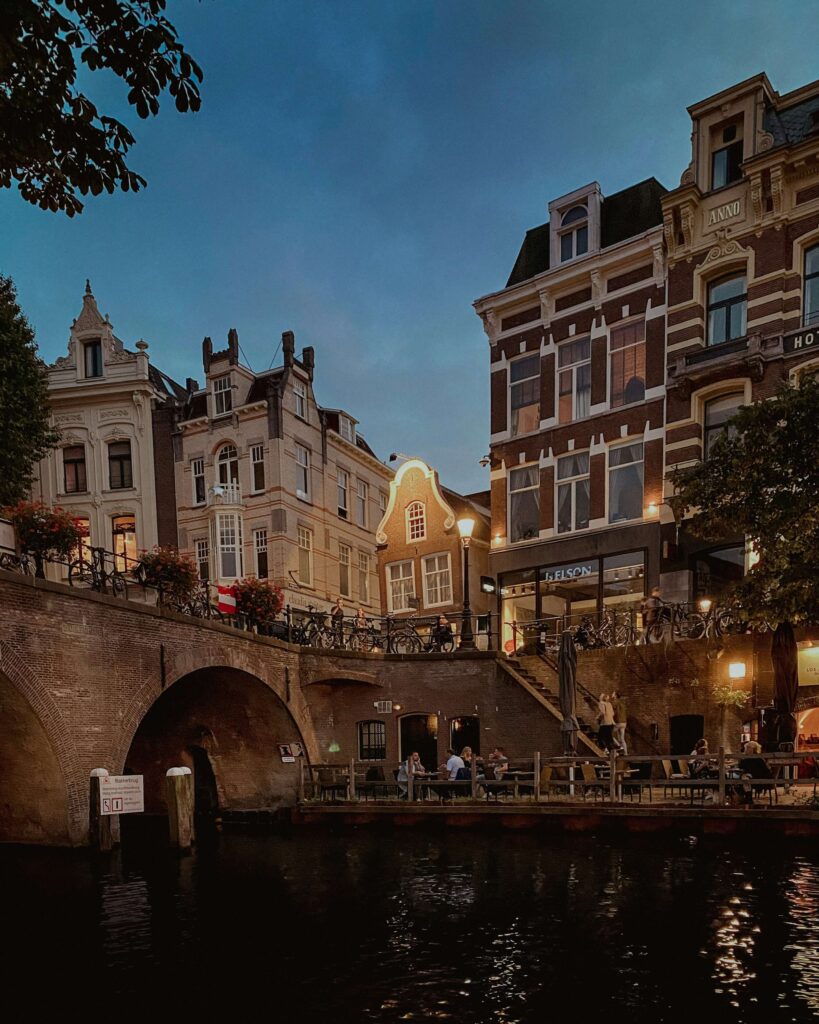
The canal runs two levels. Boats glide on top. Cafes and restaurants tuck into the wharf cellars below where medieval merchants once stored goods.
Utrecht’s canal system differs from Amsterdam’s waterways. These canals attribute wharves, stepped terraces that drop from street level to water level. Built in the Middle Ages the wharves served as loading docks where goods transferred from boats to storage cellars carved into the foundations of canal houses. When trade patterns shifted the cellars sat empty for decades until entrepreneurs converted them into restaurants, cafes and shops. Today the Oudegracht, Old Canal, forms the city’s social spine with terraces at both levels creating intimate spaces hidden from street view. The canals wind through the historic center for several kilometers. Water taxis and tour boats navigate the narrow channels.
Water laps against stone walls. Cyclists pass on the street level above. Down on the wharf level you hear conversation mixing with the clink of glasses and soft music from cafe speakers. The air smells like canal water and coffee and whatever’s cooking in the restaurants. Sunlight reaches the lower terraces in shifting patterns as it angles between buildings. People sit at tables right at water level watching ducks paddle past and boats motor by with barely a meter of clearance. Trees overhang the water creating tunnels of green in summer.
Locals treat the wharves as living rooms. They meet friends here, work from laptops and spend long afternoons doing nothing much at all.
Walk the Oudegracht at both levels to understand its genius. Street level gives you the architectural view. Wharf level gives you the human experience. Visit late afternoon when university students fill the cafes and the atmosphere shifts from work to leisure. The stepped design creates intimacy impossible in standard canal cities. Utrecht made something unique from the same basic ingredients Amsterdam used. The difference comes from those wharves cutting into the earth.
Utrecht Lumen
Where Light Paints the City
In winter darkness the city glows. Buildings become canvases. The Dom Tower transforms into a lighthouse of shifting colors against the black sky.
Utrecht Lumen is an annual winter light festival that turns the city into an open air gallery of illuminated art. Every year artists create installations that transform familiar landmarks and public spaces into experiences of light and color. Building facades become projection screens. Interactive installations invite participation, touch them, walk through them, play with light. The festival celebrates light’s power to evoke emotion and spark imagination during the darkest months. But Utrecht’s relationship with light extends beyond winter. Trajectum Lumen, the permanent light trail, operates year-round stretching from Transwijk to Hogeweide and from Lunetten Zuid to Voorveldsepolder. The trail includes artworks throughout the city. The downtown concentration spans 7.5 kilometers featuring light art in tunnels, along canals and at major landmarks. The installations create a nocturnal walking route revealing Utrecht differently after dark.
Colors wash across medieval stone. Interactive pieces respond to movement and touch. Some installations hum softly. Others stay silent. The tunnels become particularly dramatic, light transforms concrete passages into glowing chambers. People photograph everything trying to capture how their familiar city suddenly feels magical. Children run toward the brightest pieces. Adults pause studying how light manipulates perception and mood. The air smells cold and damp but the warmth of color creates psychological heat.
Locals walk the trail repeatedly finding new details each time. The winter festival draws them out despite weather. Light in darkness becomes reason enough.
Visit the winter festival in December or January when new installations debut alongside permanent trail pieces. The 7.5 kilometer downtown route takes about two hours at a relaxed pace. Start at dusk to see the city transition from day to illuminated night, that shift heightens the impact. The tunnels offer especially striking installations where contained space amplifies light’s effect. Download the trail map from the official website. Utrecht Lumen proves that cities can be artworks themselves when light becomes the medium. Winter darkness stops being something to endure and becomes the canvas that makes the colors possible.
Wilhelminapark
A Breath of Fresh Air in Utrecht
The pond reflects everything perfectly on still mornings. Trees, sky and the occasional heron standing all appear twice.
Wilhelminapark opened in 1898 named after Queen Wilhelmina who ascended the throne that same year. The park was designed in English landscape style featuring open lawns, mature trees and a central pond. It covers about 15 acres in Utrecht’s eastern district. The park includes a rose garden, playgrounds, a small cafe and plenty of benches. During World War II the park suffered from neglect but was restored afterward. Today it serves as the neighborhood’s primary green space and hosts occasional events and concerts during summer months. The park represents Utrecht’s 19th-century expansion when the medieval city began growing beyond its canal ring.
Gravel paths crunch underfoot. Birds call from branches. The pond smells earthy especially after rain. Ducks paddle in slow circles. Parents push swings while children shriek with delight. Joggers follow the perimeter path in steady rhythm. Students lie on the grass reading or napping. The rose garden blooms in waves of color releasing perfume in early summer. Old couples walk arm in arm at a pace that suggests they’ve walked this route for decades.
This is a neighborhood park not a tourist destination. People who live nearby consider it essential infrastructure for daily life. It’s where they breathe.
Come here when you need a break from Utrecht’s busy center. The park sits a pleasant 15-minute walk from the Dom Tower but feels completely removed from tourist energy. Bring coffee from a nearby cafe and claim a bench near the pond. Morning light is softest here. The park won’t overwhelm you with spectacular details. It succeeds by providing exactly what a park should, space, green and quiet. Sometimes that’s enough.
Molen de Ster
A Glimpse into Dutch Windmill History
The sails turn overhead making a steady whooshing sound that carries across the canal. Wind transformed into motion transformed into flour.
Molen de Ster “The Star Mill” stands on the eastern edge of Utrecht along the Leidse Rijn canal. Built in 1719 as a corn mill it operated commercially until 1969. The mill fell into disrepair until volunteers restored it in the 1990s. Today it functions as a working monument grinding grain when wind conditions permit. The mill stands 26 meters tall. Volunteers operate it most weekends demonstrating traditional milling techniques. You can climb up the stairs to see the massive wooden gears and millstones. The mill produces flour sold on-site. It houses in a quiet area where the historic city transitions to newer development.
Inside the mill wood creaks and groans. Gears mesh with clicking precision. Flour dust hangs in the air catching sunlight through small windows. The miller adjusts sails and checks stones with practiced hands. Everything smells of grain and wood and mechanical oil. From the top platform you see across Utrecht’s roofscape and the surrounding countryside. Wind buffets the structure. The sails pass overhead in their endless rotation creating rhythmic shadows.
Milling enthusiasts and locals interested in heritage keep this mill operating. School groups visit to learn about pre-industrial food production. The mill survives because people care enough to maintain it.
Check the operating schedule online before visiting, the mill only runs when volunteers are available and wind cooperates. Go when it’s actually grinding to understand the mill as machine rather than static monument. The climb is steep and tight so watch your head. Molen de Ster represents Utrecht’s practical heritage. This wasn’t built to be beautiful. It was built to turn grain into flour. That it happens to be beautiful anyway makes it better.
Spoorwegmuseum
A Celebration of Dutch Railways
The old locomotives stays massive and silent. You can almost hear the steam and feel the heat they once generated.
The Railway Museum, Spoorwegmuseum, occupies the former Maliebaan station built in 1874. When this station closed in 1939 the building eventually became a museum dedicated to Dutch railway history. The collection includes historic locomotives, passenger cars, signaling equipment and memorabilia spanning 175 years of rail transport. Several exhibits are interactive designed for children but fascinating for adults who remember train travel before high-speed rail. You can board vintage trains and explore restored carriages. The Great Discovery exhibition uses multimedia to trace railway development. The museum cafe operates in a converted railway carriage. The setting itself, an authentic 19th-century station, adds atmosphere impossible to replicate in modern buildings.
The museum smells like oil and metal and old upholstery. Train wheels tower overhead. Polished brass fixtures gleam. Steam whistles sit silent but you can imagine their sound. Children climb through carriages pretending to be conductors. The station hall echoes with footsteps and voices. Outside on the platform historic trains placed on tracks going nowhere. Light filters through the iron and glass roof creating Victorian atmosphere. Vintage advertisements line the walls showing how railways once marketed luxury and speed.
Families dominate the visitor base but train enthusiasts visit in serious concentration photographing details and studying technical specifications. The museum respects both audiences.
Plan at least two hours because the collection sprawls across multiple buildings and outdoor areas. The interactive exhibits work best for children under 12. Adults should focus on the historic rolling stock and the beautifully preserved station architecture. Visit weekday mornings to avoid school groups. The museum demonstrates how railways transformed the Netherlands from a collection of isolated towns into an integrated nation. That story matters beyond just train nostalgia.
Centraal Museum
A Treasure Trove of Dutch Art and History
The collection jumps centuries. Medieval altarpieces hang near contemporary video installations. Somehow it works.
Centraal Museum opened in 1838 making it one of the Netherlands’ oldest municipal museums. The collection spans 1,000 years of art and artifacts connected to Utrecht. Holdings include medieval religious art, Golden Age paintings, modern and contemporary works and fashion collection. The museum owns the world’s largest collection of works by Utrecht native Gerrit Rietveld including furniture and architectural designs. The building itself combines a medieval monastery with modern additions. Temporary exhibitions explore varied themes from local history to international contemporary art. The museum also manages the Rietveld Schröder House several blocks away.
Galleries feel spacious and well lit. The monastery courtyard provides a quiet break between exhibition halls. Medieval wood carvings smell faintly of age. Contemporary installations fill rooms with sound and light. The fashion galleries display historical clothing in climate controlled cases. Some visitors sketch in notebooks. Others photograph the Rietveld furniture pieces studying their geometric precision. The museum cafe overlooks the courtyard where sunlight filters through old windows.
Art students and locals who maintain museum memberships form the core audience. Tourist crowds stay lighter here than at Amsterdam’s major museums. That makes for better viewing experiences.
Allow three hours minimum to see the permanent collection properly. Don’t skip the medieval section, the sculptures reveal Utrecht’s religious importance. The Rietveld collection deserves focused attention especially if you plan to visit the Schröder House afterward. Go Wednesday through Friday when the museum stays quietest. Utrecht’s Centraal Museum lacks the international fame of Amsterdam’s institutions but offers deeper local context. Sometimes the regional perspective teaches more than the canonical masterpieces everyone already knows.
Rietveld House
A Pioneering Masterpiece of Modern Architecture
The walls slide open. Rooms become one space or divide into private chambers depending on the configuration. Architecture as transformation.
The Rietveld Schröder House was designed by architect Gerrit Rietveld and built in 1924 for Truus Schröder-Schräder and her three children. The house embodies De Stijl movement principles, primary colors, geometric forms and flexible space. The upstairs functions as one large room with sliding and rotating panels allowing inhabitants to reconfigure the layout. Built at the end of a terrace row the house originally overlooked open countryside. UNESCO designated it a World Heritage Site in 2000 recognizing its revolutionary approach to domestic architecture. The house is now a museum operated by Centraal Museum. Visits are by guided tour only with strict limits on daily visitors to preserve the fragile interior.
Primary colors accent white walls. Windows frame views like abstract paintings. The space smells of old wood and careful preservation. The furniture, all Rietveld designs, demonstrates how form and function integrate. Sliding panels move on metal tracks. The guide explains how Truus lived here until 1985 refusing to move even as the city grew around her. Light floods through large windows. Every angle feels intentional. Nothing is decorative. Everything serves purpose.
Architecture students and design enthusiasts book tours months ahead. This house influenced modernism’s entire trajectory. Seeing it in person clarifies what photographs can’t capture.
Book tours through the Centraal Museum website at least two weeks in advance, slots fill quickly. Maximum group size is twelve so the experience stays intimate. The tour lasts exactly one hour. Photography is prohibited to protect materials from light damage. Visit the Centraal Museum’s Rietveld collection first for context. The Schröder House proves that revolutionary ideas can work in daily life. Truus raised three children here while living inside an artwork. That’s commitment to principle.
Beatrix Theater
A Stage for Performing Arts Delights
The seats fill with people dressed for an occasion. Conversations hush as the lights dim. Then music or dialogue fills the space and everyone forgets they’re in Utrecht.
Beatrix Theater opened in 1981 as Utrecht’s main venue for theater, musicals and concerts. The building lays in the Jaarbeurs convention center complex serving as the city’s largest performing arts space with 1,500 seats. The programming ranges from Dutch-language theater to international touring musicals to classical concerts. Major Dutch productions premiere here before touring the country. The theater underwent major renovations in 2017 improving acoustics and updating facilities while maintaining the 1980s exterior. The venue functions as Utrecht’s cultural anchor for mainstream performing arts distinct from smaller experimental theaters in the city center.
The lobby buzzes with pre-show energy. People queue at the bar. The smell of coffee and perfume fills the air. Inside the auditorium seats slope steeply providing clear sightlines. The acoustics feel precise, voices carry without amplification and orchestras bloom with clarity. During performances the audience falls silent. At intermission conversations burst forth as people process what they’ve seen. The building shows its age in some details but the renovations brought technical systems into modern standards.
Utrecht residents subscribe to seasons here. For many this theater defines their cultural calendar. It’s where they mark occasions and celebrate anniversaries with shows.
Check the schedule for Dutch-language productions if you speak Dutch or international touring shows if you don’t. Book directly through the theater website for best seat selection. Arrive 30 minutes early to avoid the lobby rush and settle into your seat. The theater district around Jaarbeurs offers pre-show dining options within walking distance. Beatrix Theater serves Utrecht the way every city needs at least one quality venue, providing professional productions without requiring travel to Amsterdam.
De Boerenmarkt
A Taste of Dutch Delights
The farmer holds up a muddy carrot still dusted with soil. “Pulled this morning,” he says. You believe him.
De Boerenmarkt “The Farmers’ Market” operates Wednesday and Saturday mornings in Vredenburg square in Utrecht’s city center. The market connects regional farmers directly with consumers eliminating middlemen and grocery store markups. Vendors sell vegetables, fruits, cheese, eggs, meat, bread, flowers and preserves. Most products come from farms within 50 kilometers. The market follows seasonal patterns, asparagus in spring, tomatoes in summer, pumpkins in autumn. Some vendors have held the same spots for decades. Their customers know them by name and ask about their families. The market represents a resistance to supermarket culture and a commitment to knowing where food originates.
The market smells like earth and cheese and fresh bread. Vendors call out what’s best today. Someone’s selling raw milk. Another offers heritage potato varieties you’ve never heard of. Flowers overflow buckets in impossible colors. The mushroom vendor explains which varieties work best for which cooking methods. People crowd around popular stalls. Shopping bags grow heavy with produce. The cheese samples are generous. Try one and you’ll probably buy a wedge. Conversations happen in Dutch with occasional English for obvious tourists.
Locals shop here weekly. They build their meal plans around what’s in season. The market dictates the rhythm of their cooking.
Arrive before 10am for the best selection especially on Saturdays when the market grows larger. Bring cash because not all vendors accept cards. A reusable bag is essential. Ask questions about products, vendors appreciate genuine interest and offer preparation tips. De Boerenmarkt reminds you that food comes from somewhere specific grown by actual people. In an age of global supply chains that connection matters. The carrots taste better when you’ve met the farmer.
Conclusion
FAQs
How to Get to Utrecht
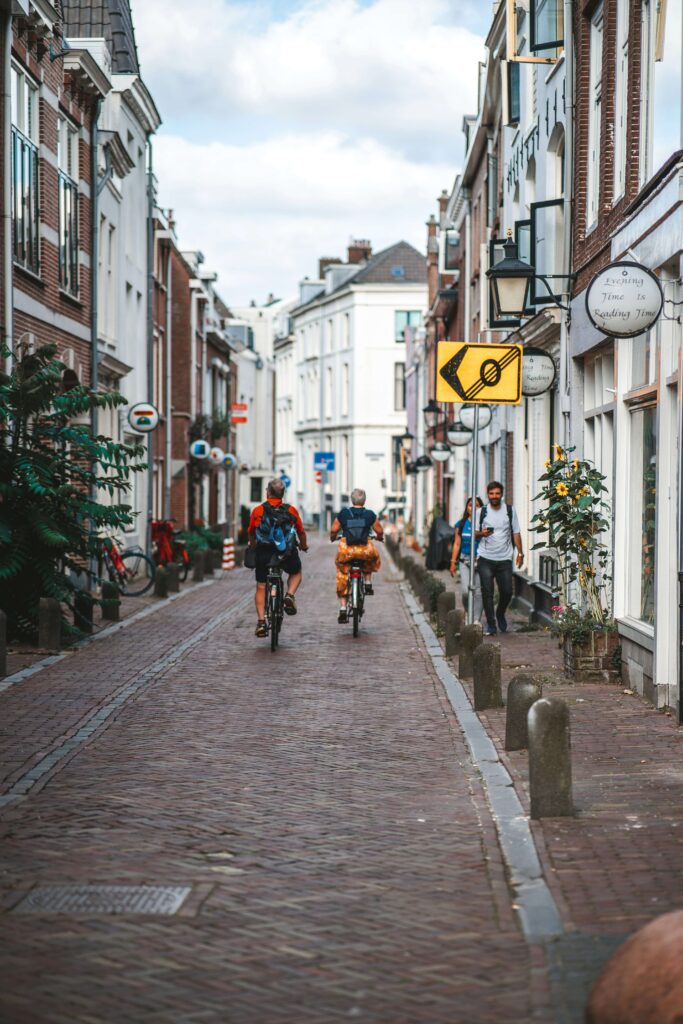
How to Travel to Utrecht From Major Cities
Here’s an outline from key locations:
Amsterdam
- Car: Enjoy a scenic drive of approximately 45 minutes via A2 highway.
- Train: Direct trains from Amsterdam Station travel around 30 minutes.
- Bus: Regular bus services take around 1 hour.
Rotterdam
- Car: A short 45 minutes drive via A13 highway.
- Train: Direct trains from Rotterdam Station take around 30 minutes.
- Bus: Quick bus connections with a travel time of 1 hour.
The Hague
- Car: Take in the scenery with a 45 minutes drive via A13 highway.
- Train: Direct trains from The Hague Station take 30 minutes.
- Bus: Comfortable buses connect The Hague and Utrecht in around 1 hour.
Parking in Utrecht
- Street Parking: Utrecht offers limited on street parking.
- Public Parking Lots: The city provides several public parking garages and lots.
- Hotels w/ Parking: Many hotels in Utrecht offer on site parking facilities.
Airport Access in Utrecht
- Location: Situated 40 km west of Utrecht.
- Transportation: Taxis, shuttle services, and trains are readily available for a quick transfer.
- Car Rental: Several reputable car rental agencies operate at Schiphol Airport.
Ground Transportation in Utrecht
Cars, buses and trains, the triumphant trio of travel. Providing a variety of choices:
Best Resources for Travel Planning

Flights
- Skyscanner
- Kayak
- Momondo
Accommodation
- Booking
- Agoda
- Hostelworld
- Airbnb
- +More
Transport
- Rental Cars
- Flixbus
- Trainline
- Interrail Pass
- + More
Tickets
- Viator
- Get your Guide
- Tripadviosor
Travel Finance
- Wise
- Revolut
Credit Cards
- American Express Gold Card
- Citi Premier Card
Travel Insurance
- Safety Wing
- Insure My Trip
- Medj
VPN
- Surfshark
- NordVPN
Flights
For seamless travel, meet your flight-booking wizards.
- Skyscanner: The Swiss Army knife, budget-wise, with a user-friendly interface.
- Kayak: Your travel detective, comparing deals across platforms, explore feature.
- Momondo: The local friend, uncovering affordable flights, for unique itineraries.
Accomandation
Choosing accommodation is like selecting a travel companion—it shapes your journey.
- Booking: Cozy guesthouses to luxury hotels, user-friendly and easy booking.
- Agoda: Unveiling unique accommodations, perks through a loyalty program.
- Hostelworld: The budget explorer’s compass, guiding to affordable stays.
- Airbnb: The disruptor, your local friend guiding you to unique spots.
- Secret Escapes: Offers exclusive deals on luxury accommodations worldwide.
- HostelPass: Discounts and perks for budget travelers staying in hostels.
- Plum Guide: Curates a collection of high-quality vacation rentals vetted by experts.
Transport
Discover Cars, Buses, and Trains for a journey as memorable as your destination.
- Rental Cars: Freedom on wheels, from compacts to SUVs, explore at your pace.
- Flixbus: Budget-friendly bus journeys across Europe for city-hopping.
- Trainline: Swift and easy track navigation with a one-stop ticket booking.
- Interrail Pass: Unleash European train travel magic, exploring diverse cultures.
- Eurail Pass: Extensive rail travel across Europe’s diverse landscapes.
- Rom2Rio: Simplifies travel planning by comprehensive route options.
- Outdoorsy: Connects nature enthusiasts with distinctive outdoor Rental.
- RV Share: Enables travelers on road trips through peer-to-peer RV rentals.
Tickets
Online ticketing platforms have revolutionized travel and entertainment experiences.
- GetYourGuide: Turns ordinary trips into immersive adventures, local guides.
- Viator: Simplifies your travel experience, offering a seamless platform for tours.
- Tripadvisor: Your guide to travel reviews and recommendations.
Travel Finance
Simplifying transactions and currency exchange for a smooth travel money experience.
- Wise: Formerly TransferWise, empowers travelers with real mid-market rates.
- Revolut: Fintech trailblazer, an app, currency wallet and fee-free spending abroad.
Credit Cards
Credit cards offer benefits like rewards and are useful for easy transactions or purchases.
- American Express Gold Card: Dive into a world of privileges and points.
- Citi Premier Card: A blend of rewarding points and flexible redemption options.
Travel Insurance
Providing comprehensive coverage and protection for travelers globally.
- Safety Wing: Excels in flexibility, providing coverage for digital nomads.
- Insure My Trip’s: Extensive network facilitates easy comparison.
- Medjet: Emergency transport, ensuring rapid air medical transport.
VPN
Encrypting your connection, hides your IP address, and defense against cyber threats.
- Surfshark: User-friendly features, unlimited device connections, secure.
- NordVPN: Vast server network, high speed connections and safe online presence.